Why Smart Wearables Struggle With Reliable Health Metrics
From heart rate tracking to sleep scores, here's why wearable health metrics are often less precise than users expect.

Modern smartwatches and fitness trackers can measure heart rate, sleep, stress, blood oxygen, ECG, temperature and even estimate recovery scores. Marketing of these smart wearables often makes these devices sound almost medical-grade. But in reality, wearable health metrics are often inconsistent, delayed or misleading. One day, your watch says you slept perfectly. The next day it claims you’re stressed while sitting calmly at your desk.
The problem is not that wearables are “fake.” The real issue is that human biology is extremely difficult to measure from the wrist. If you look at consumer wearables purely as plug-and-play biometric labs, you will quickly run into frustration. This breakdown looks at why wearable health metrics struggle with accuracy, the technical limitations behind sensors, why algorithms matter more than hardware and what developers building wearable apps should understand before trusting the data.
The Biggest Misunderstanding: Wearables Don’t Directly Measure Health
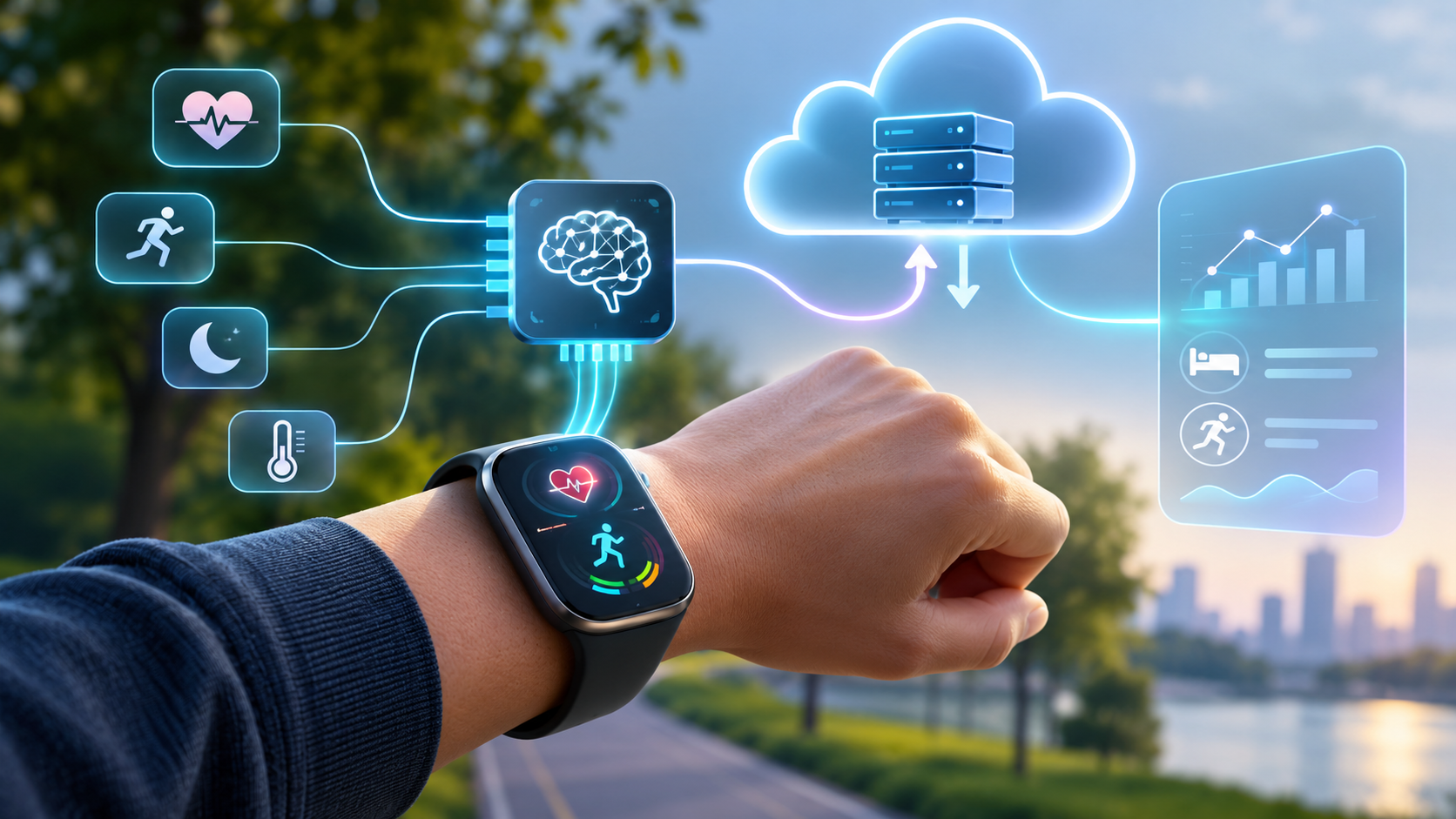
The core concept most users misunderstand is that wearables mostly measure signals, not actual health conditions. Sensors capture indirect biological indicators and algorithms then estimate outcomes.
Your smartwatch cannot peek inside your brain to check your sleep stages. Instead, it tracks a combination of your wrist movement and heart rate patterns to guess whether you are in deep, light or REM sleep. Similarly, a wearable doesn't know you are stressed. It detects patterns that statistically resemble stress by calculating Heart Rate Variability (HRV) the millisecond fluctuations between heartbeats. When your autonomic nervous system is sympathetic (fight-or-flight), those intervals tighten up.
Every major metric is a step removed from direct measurement:
Sleep tracking: Estimated from accelerometer movement + heart rate patterns.
Stress scores: Estimated from HRV trends.
Calories burned: Built on predictive mathematical models, not direct metabolic measurement.
Blood oxygen (SpO2): Estimated using optical light reflection values.
AA study published in Digital Medicine highlights this exact gap. Consumer biometrics rely heavily on proxy measurements. The device captures raw data, but the software makes the final evaluation.
Wrist-Based Sensors Are Inherently Limited
To understand why these estimations fail, we have to look at the physical limitations of wearable hardware. The primary tool for wrist-based tracking is photoplethysmography (PPG).
PPG works by shining LED light (usually green) into your skin and measuring how much of that light reflects back to a photodiode. As your heart pumps, blood volume in your wrist capillaries increases and decreases, changing the light absorption.
However, the wrist is a terrible place to gather clinical data. A loose fit lets ambient light leak in, ruining the reading. Sweat can refract the light, cold temperatures cause peripheral vasoconstriction (shunting blood away from the skin)
and tattoos can absorb the LED wavelengths entirely. Furthermore, research from the Journal of Personalized Medicine has demonstrated that PPG sensor accuracy can vary across different skin tones because melanin absorbs green light wavelengths more readily, making it harder to pull a clean signal from darker skin during activity.
This is why traditional chest straps remain the gold standard for athletes they measure actual electrical heart signals (ECG) directly from the chest wall, bypassing the optical noise of the skin. For developers, the takeaway is clear: even excellent algorithms cannot fully fix noisy sensor input.
Motion Is the Enemy of Accuracy
Wearables perform best when users are doing nothing sleeping, sitting still or walking steadily. The moment you introduce dynamic movement, the accuracy drops significantly.
During weightlifting, high-intensity interval training (HIIT) or cycling, your wrist muscles flex, the device shifts position and rapid blood flow changes occur. These movements create motion artifacts, corrupt signals that mimic or mask your actual pulse wave.
If you are running at 160 steps per minute and your heart rate is also around 160 beats per minute, the sensor can experience "cadence lock," where it mistakenly tracks the rhythmic movement of your arm instead of your pulse. Many "smart" features are actually complex filtering systems trying to separate biological signals from movement noise. The harder humans move, the harder wearables struggle.
Algorithms Matter More Than Most People Realize
Because raw sensor data is messy, software intelligence is where the real work happens. Two devices using identical sensors can produce wildly different results because their signal processing, training datasets, machine learning models and calibrations differ.
A wearable company’s real competitive advantage is its algorithm stack, not the hardware component it buys from a supplier. Apple, Garmin, Oura and WHOOP all interpret similar biological signals differently. For example, one brand might weigh movement heavily in its sleep algorithms, while another relies almost exclusively on respiratory rate and HRV.
Most Health Metrics Are Estimates Built on Population Models
Why is personalization so difficult? Many wearable metrics are based on generalized population data.
When a tracker tells you that you burned 450 calories during a workout or estimates your VO2 max, it isn't measuring your specific oxygen consumption or heat output. It is matching your profile (age, weight, gender, heart rate) against a statistical model derived from a specific cohort of people.
Human biology varies massively between individuals. A model trained on thousands of average, healthy people may still fail for:
Elite athletes or highly trained individuals
People with underlying chronic medical conditions
Individuals with irregular shift-work sleep schedules
Different age brackets outside the original test pool
A wearable can be statistically accurate across an entire population study while being personally inaccurate for specific users on any given day.
"Medical Grade" and Consumer Wearables Are Not the Same Thing
It is important to clarify the difference between wellness tracking and medical diagnostics. Consumer wearables prioritize battery life, comfort, convenience and continuous tracking. Medical devices prioritize clinical accuracy, controlled conditions and rigorous validation standards.
Even FDA-cleared features on smartwatches often apply only to specific functions under strict conditions. An on-demand ECG feature can help detect irregular rhythms like Atrial Fibrillation (AFib) while you sit perfectly still, but it does not replace a comprehensive medical evaluation or a continuous 12-lead clinical ECG monitor. Consumer devices are built for lifestyle trends, not acute diagnostic decision-making.
Developers Should Treat Wearable Data as Probabilistic
If you are developing applications that ingest data from Apple HealthKit, Google Health Connect or third-party wearable APIs, you should treat this information as probabilistic rather than absolute ground truth.
Good engineering practices when building health apps require managing data uncertainty:
Smooth Noisy Data: Avoid relying on individual, isolated data points. Look at moving averages over hours or days.
Use Trend Analysis: Focus on relative shifts (e.g., "HRV dropped 20% below the user's 7-day baseline") rather than absolute values.
Combine Multiple Sensors: Cross-reference data lines. If the accelerometer shows intense movement but the PPG heart rate drops suddenly, treat that heart rate reading as low-confidence.
Detect Low-Confidence Situations: Flag and filter out data collected during periods of high motion or poor skin contact.
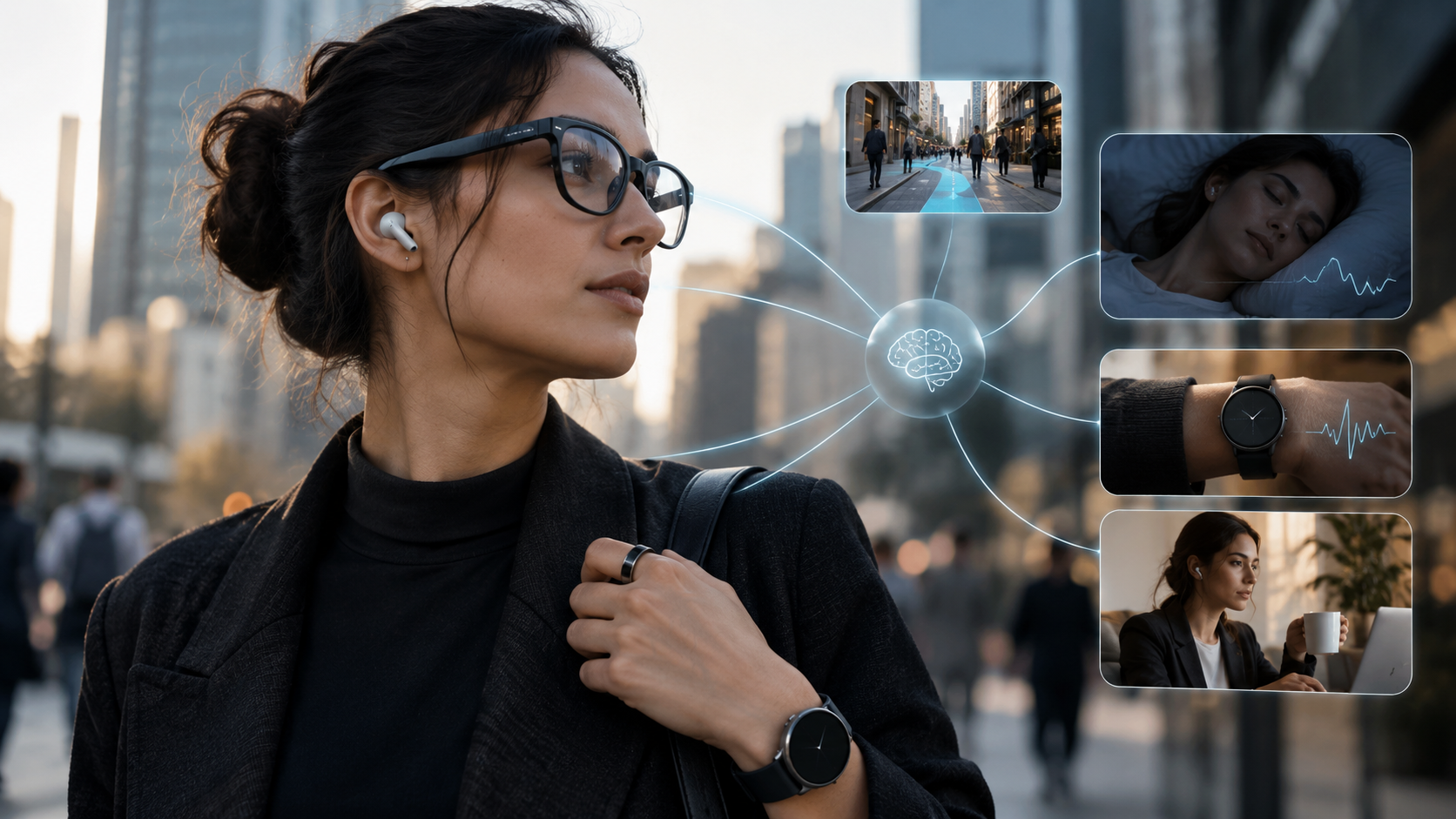
The future of health tech relies on sensor fusion, AI-assisted interpretation and context-aware health models that look at multimodal tracking. The most useful wearable systems may not be the ones that measure the most data, but the ones that understand uncertainty best.
Final Thoughts
Wearables are still incredibly useful tools despite their limitations. They succeed remarkably well at trend tracking, habit awareness, behavioral feedback and long-term monitoring. Seeing your resting heart rate steadily drop over three months is a valid, encouraging indicator of cardiovascular progress.
However, they struggle when users expect perfect medical accuracy from noisy wrist sensors during a chaotic day. The future of wearable health technology is not just better sensors it’s better interpretation. For developers, the challenge is no longer simply collecting data. It’s understanding which data can actually be trusted and when. Smart wearables are not failing because they collect too little data. They struggle because the human body is far harder to model than most technology companies expected.
About the author
- Hi, I'm Reetain Raina, a Technical Writer specializing in Wearable Technology, Artificial Intelligence, Health Tech, and emerging consumer technologies. I research and write in-depth articles that explain how modern technologies are shaping the future of everyday life. My work covers smart rings, smartwatches, smart glasses, AI-powered devices, digital health, and wearable computing. Through technical analysis and technology-focused storytelling, I aim to make complex innovations easier to understand for professionals, technology enthusiasts, and curious readers. Areas of interest: Wearable Technology • Artificial Intelligence (AI) • Health Tech • Smart Rings & Smart Glasses • Future Consumer Technology.
Comments
Join the discussionSpot on! We’ve been conditioned to view every single wearable alert as absolute truth, which just causes unnecessary anxiety. Shifting the focus to long-term trend lines completely changes how you interact with your data for the better."
Exactly. I think that's the mindset shift most people still haven't made. A single alert can be influenced by poor sensor contact, movement or an unusual day, but trends observed over weeks or months often tell a much more meaningful story. Wearables become far more useful when we treat them as guides for awareness rather than infallible judges of our health.