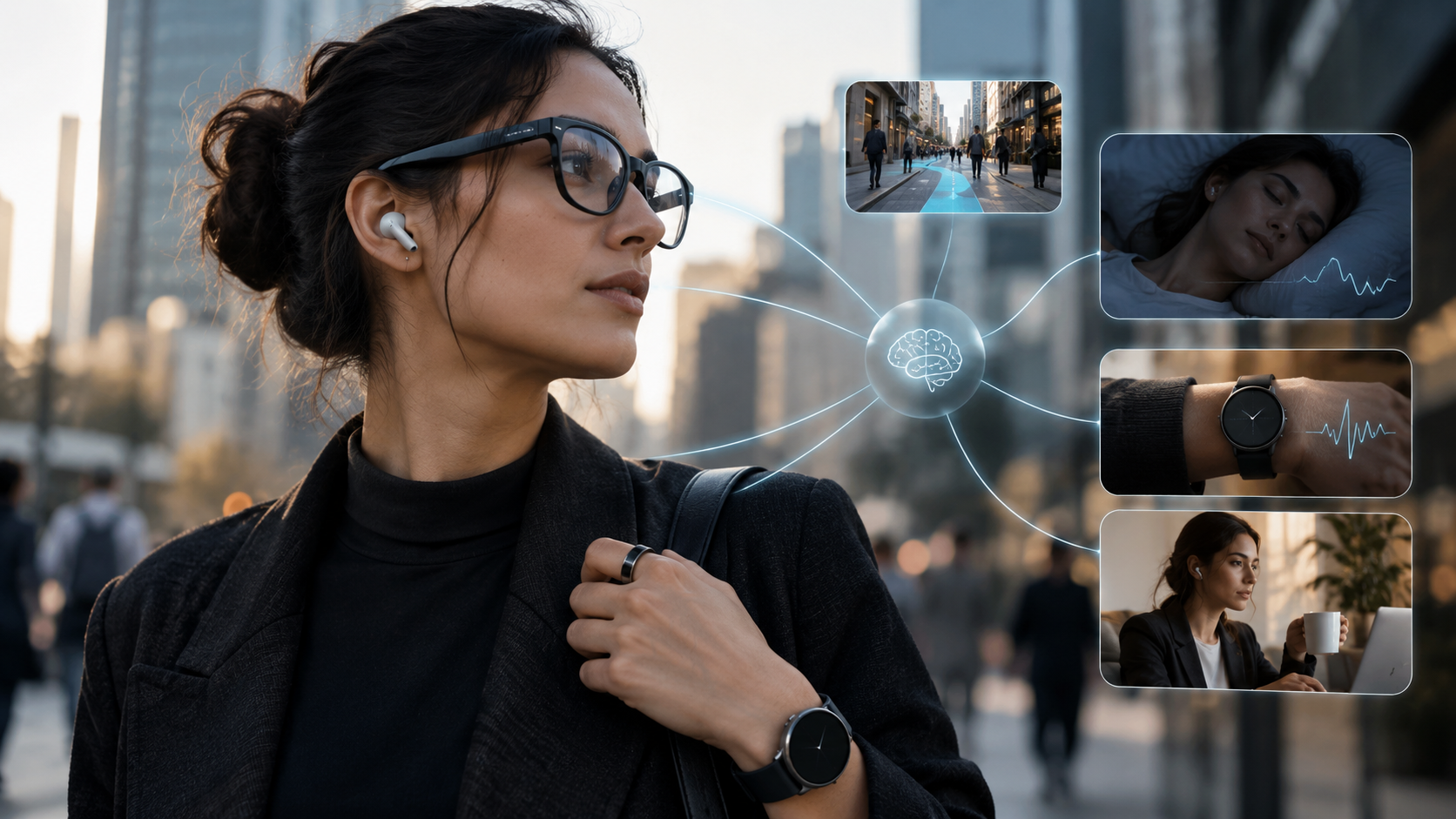
How Context-Aware Consumer Apps Combine Sensors, Local AI and Cloud Models
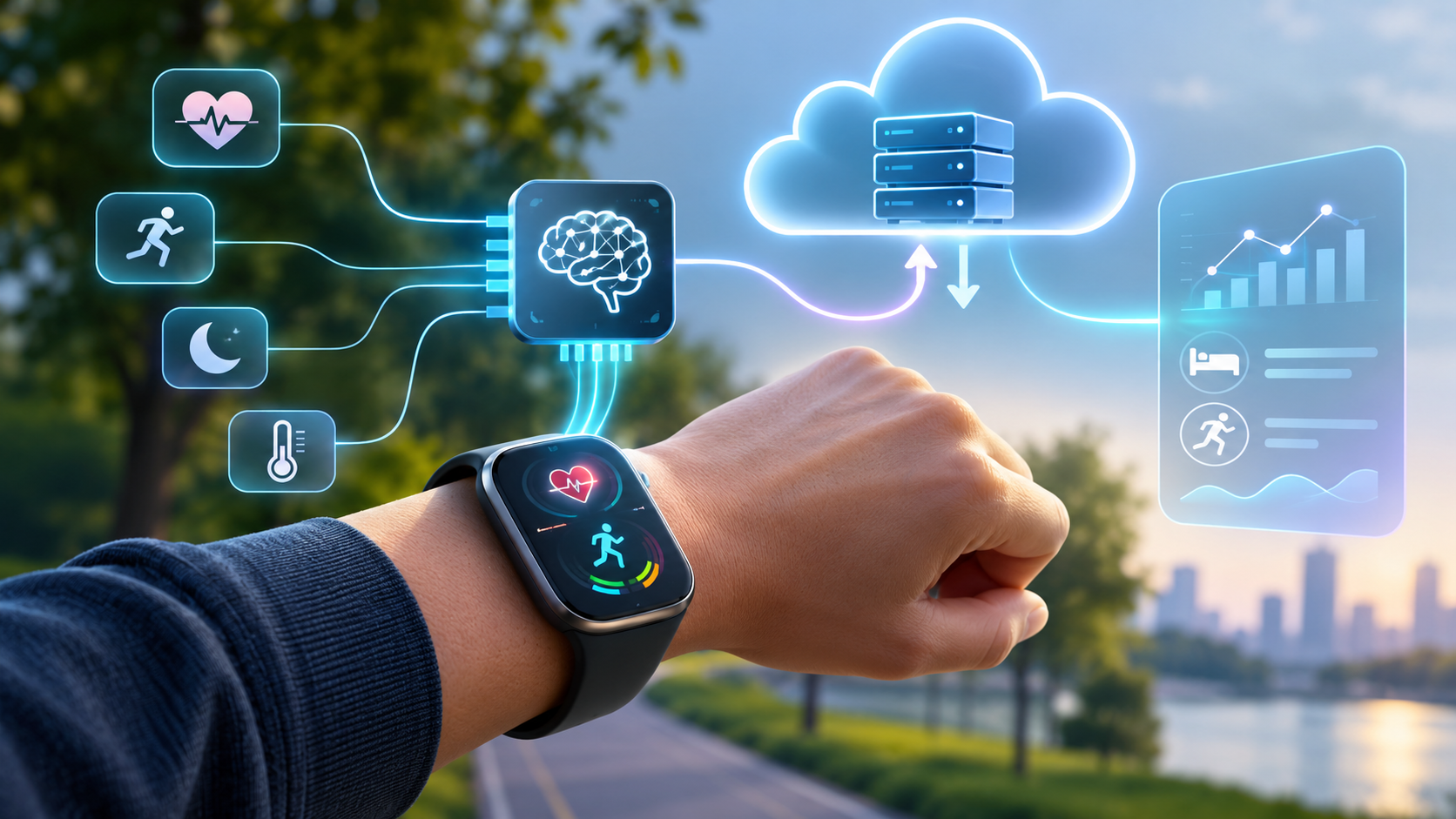
Consumer wearables have become much better at collecting health and activity data. A smartwatch can measure heart rate, track movement, estimate sleep patterns and monitor changes in physical activity throughout the day. However, collecting these measurements is only one part of the process. The more difficult task is understanding what they mean when viewed together.
For example, a sudden increase in heart rate does not always mean someone is exercising. It could happen while climbing stairs, walking uphill or responding to stress. Similarly, a wearable might detect very little movement during the night, but that alone does not explain whether someone was sleeping comfortably or experiencing frequent interruptions.
This is where context-aware computing becomes important. By combining information from different sensors, artificial intelligence models running directly on the wearable and cloud-based processing, these devices can build a more useful picture of a person's daily activity. Instead of looking at individual measurements, they can examine how different signals relate to one another and identify patterns that would otherwise be difficult to recognise.
However, making this work requires more than adding AI to a smartwatch. It involves sensor fusion, machine learning, efficient data processing and careful decisions about which information should stay on the device and which can be processed elsewhere.
What Makes an App Context-Aware?
An ordinary app generally waits for a user to perform an action before it does anything. A context-aware app, on the other hand, also considers the situation in which that action happens.
For example, a navigation application on your smartwatch can recognise that someone is cycling rather than walking. A fitness tracker can distinguish between walking, running and remaining stationary. A health application can combine sleep duration, daily activity and heart rate trends to provide a far more useful and personalised daily summary.
Context Is More Than Location
Context can include a wide variety of factors. It covers physical activity, location and movement, the time of day and environmental conditions. It also involves device usage patterns, recent interactions and physiological signals from wearables, such as blood oxygen or skin temperature.
It is important to remember that context is not always a hard fact. Sometimes it is an estimate based on several overlapping signals and the application needs to gracefully account for uncertainty. This fundamental concept is explored deeply in A Conceptual Framework and a Toolkit for Supporting the Rapid Prototyping of Context-Aware Applications, which highlights how systems must interpret varied environmental inputs to build a reliable picture of the user's situation.
Sensors Are the First Layer of Context
Sensors act as the fundamental input layer of context-aware applications. They continuously collect measurements from the physical environment or the user's body, serving as the sensory organs of the wearable device.
Different Sensors Capture Different Types of Information
To build a clear picture of what you are doing, wearables utilize several specific sensors:
- Accelerometer: Measures linear acceleration, which is vital for walking and running detection.
- Gyroscope: Tracks rotational movement, helping to determine the device's orientation and complex wrist movements.
- GPS: Pinpoints geographic position for accurate navigation and location context.
- Microphone: Captures audio signals for sound classification, such as detecting sleep apnea or noisy environments.
- Camera: Gathers visual information for object and scene recognition, often found in emerging AR glasses.
- Heart rate sensor: Records pulse-related measurements for precise activity and health tracking.
- Ambient light sensor: Detects light intensity to manage automatic screen adjustments or identify sleep environments.
Raw Sensor Data Is Not the Same as Understanding
While sensors are powerful, their raw data has limits. An accelerometer can detect movement, but it cannot automatically understand whether someone is walking, running, cycling or travelling in a moving vehicle. Similarly, GPS can show that a person has moved between two locations, but it cannot always explain why. This disconnect creates the need for the next crucial layer: sensor fusion.
Sensor Fusion: Turning Separate Signals Into One Picture
Sensor fusion is the process of combining information from multiple sensors to create a more useful, unified understanding of an event or situation.
Suppose a smartwatch detects repeated movement through its accelerometer. At the exact same time, GPS shows a gradual change in location, while the gyroscope provides additional information about the swinging motion of the device. Individually, these signals offer limited information and can even be misleading. Together, they can help an application estimate with high confidence whether the user is taking a brisk walk or performing another activity.
Why Combining Sensors Improves Context Detection
Using multiple sensors simultaneously provides three distinct advantages:
- Better interpretation: One sensor can provide context that another sensor cannot, filling in vital informational blind spots.
- Handling uncertainty: Multiple signals can help reduce errors caused by unreliable individual measurements, such as a temporary loss of a GPS signal under tall buildings.
- More useful decisions: Applications can make decisions using a much broader and more accurate picture of the situation.For a detailed look at how these varied signals are successfully aggregated, the study From Data Acquisition to Data Fusion: A Comprehensive Review explains how separate sensor readings are merged to drastically improve activity recognition.
The Role of Sensor Fusion Algorithms
To marry these distinct data points, wearables use specialized mathematical tools. Kalman filters are used to predict and smooth out noisy data, while complementary filters balance out high and low-frequency sensor inputs. Probabilistic models help estimate the likelihood of a specific action and machine learning-based classification sorts these patterns into recognizable human activities. These algorithms work continuously to combine measurements and account for noise.
Why Local AI Matters in Context-Aware Apps
Once sensors collect information and sensor fusion creates a more useful picture, an application needs a way to interpret that information immediately. This is where machine learning models running directly on smartwatches, fitness rings and other consumer wearables become incredibly useful. This localized processing is commonly known as edge AI.
What Can AI Do Directly on a Device?
Running on-device AI allows a wearable to independently manage several impressive tasks. It can instantly recognize walking, running or cycling patterns (often termed Human Activity Recognition). It can detect unusual movement patterns, such as a severe fall. It is also capable of classifying sounds without continuously uploading audio to a server and recognizing familiar activity patterns strictly from raw sensor readings. These models do not need an internet connection to perform these rapid predictions.
Why Processing Data Locally Makes Sense
Keeping the computing on the wearable itself offers three critical benefits:
- Lower latency: The device doesn't need to wait for a remote server to process every request, meaning you get immediate feedback mid-workout.
- Privacy: Sensitive physiological information can remain securely on the device instead of being transmitted across the internet.
- Offline functionality: Vital features can continue working perfectly without an active internet or Bluetooth connection.
However, local AI is not a perfect solution for everything. Wearables have extremely limited memory, processing power and battery capacity. The complexities of optimizing these models for constrained hardware are explored heavily in On-Device Deep Learning for Mobile and Wearable Sensing Applications: A Review, which addresses the ongoing challenge of balancing intelligence with resource consumption.
Where Cloud Models Enter the Picture
While local AI handles the immediate environment, cloud models enter the picture as the next strategic layer. It is crucial to understand that cloud models don't necessarily replace on-device AI rather, they complement it.
A smartwatch might easily recognize that someone has been physically active using a small local model. But understanding longer-term patterns across multiple days, processing larger amounts of aggregated health information or generating a detailed, customized health explanation may require far more computational resources than a wrist-worn battery can support.
What Makes Cloud Models Useful?
Connecting a wearable to the cloud unlocks highly advanced capabilities. Cloud models are uniquely equipped for processing larger and more complex datasets. They excel at finding subtle trends across longer periods, such as a gradual change in resting heart rate over a month. When authorized, they can combine information from different connected services. Furthermore, cloud computing can generate detailed natural-language explanations and run massive deep-learning models that are simply too large for a wearable device.
The Trade-Off Between Local and Cloud Processing
Despite its vast power, cloud processing introduces distinct limitations. It depends entirely on network availability and sending data to remote servers inevitably introduces communication delays. Transmitting sensitive user information creates additional privacy and security considerations and cloud inference can introduce ongoing operational costs. The logistics of dividing this deep-learning workload effectively between the wearable and the server is thoroughly analyzed in Neurosurgeon: Collaborative Intelligence Between the Cloud and Mobile Edge.
How Sensors, Local AI and Cloud Models Work Together
Instead of operating as isolated technologies, sensors, local AI and the cloud work harmoniously inside a single application. When they are perfectly coordinated, a basic piece of hardware transforms into an intelligent, context-aware companion.
A Practical Example: Understanding a User's Daily Activity
Imagine someone starts their morning with a long walk. Here is how the entire system operates to understand that event:
- Sensors collect information: The smartwatch's accelerometer and gyroscope detect rhythmic movement, while the GPS continuously provides location information.
- Sensor fusion combines signals: The application merges these varied measurements to filter out random wrist movements and estimate the user's actual physical exertion.
- Local AI interprets the data: A lightweight, on-device classification model recognizes the specific motion signature and classifies the activity as walking. It does this instantly and continues working even if the user left their smartphone at home.
- Cloud models analyse broader patterns: Once a network connection is available, if the user has enabled cloud-based analysis, selected activity summaries are synced. The cloud combines this new session with historical information to identify longer-term cardiovascular trends.
- The application responds: The user is presented with a useful, holistic summary of their morning routine instead of simply displaying a list of disconnected sensor readings.
Why a Hybrid Architecture Makes More Sense
Not every task needs the exact same amount of computing power. Simple, time-sensitive tasks can stay on the device to ensure speed and preserve battery life. Conversely, more demanding analysis and pattern recognition can be routed to cloud infrastructure when necessary. This hybrid architecture, supported by research in A Survey on Deep Learning in Edge–Cloud Collaboration, elegantly balances processing speed, battery consumption, privacy and computational power.
The Engineering Challenges Behind Context-Aware Applications Building these seamless wearable experiences is incredibly difficult. Developers face a unique set of engineering challenges to ensure the device remains helpful and unobtrusive.
Sensor Noise and Inaccurate Predictions
Sensors do not always produce reliable readings. How the device is worn, the environmental conditions and sudden movements can severely affect the quality of collected information. For example, a model trained to accurately recognize walking might perform poorly if the user is pushing a shopping cart, simply because their wrist remains stationary while their body moves.
Battery and Resource Consumption
Continuously collecting sensor data and running AI models can drain a small wearable battery very quickly. Developers must optimize sensor sampling frequencies, deciding exactly how often sensors should collect information. They also heavily rely on local AI optimization techniques like model quantization and pruning to ensure the models run efficiently without killing the battery.
Privacy and Data Management
Context-aware wearables constantly process location, audio, movement and highly intimate physiological information. Developers need to implement clear permission systems and guarantee secure data storage. Employing data minimization, collecting only what is strictly necessary and maintaining transparent cloud-sharing practices are mandatory to retain user trust.
Network Dependency and Model Coordination
Cloud connectivity isn't always reliable, particularly for users who exercise outdoors. Applications must handle offline situations gracefully, manage delayed uploads and handle synchronisation without duplicating data. Developers also have to bridge the gap between quick local predictions and deeper cloud analysis. A great breakdown of these practical limitations in activity recognition can be found in A Systematic Review of Smartphone-Based Human Activity Recognition Methods for Health Research, which outlines the complexities of capturing real-world human behavior.
The Future of Consumer Apps Is About Understanding Context
The next generation of consumer applications won't simply depend on collecting more data or running larger AI models. Their usefulness will depend entirely on how effectively they understand the information coming from different sources.
Sensors provide the vital physical signals, local AI helps interpret immediate situations in real-time and cloud models provide the heavy computational power when broad reasoning is needed. Ultimately, the interesting part of context-aware computing isn't how much information our devices can collect. It's how well they can understand what that information actually means.
\
About the author
- Hi, I'm Reetain Raina, a Technical Writer specializing in Wearable Technology, Artificial Intelligence, Health Tech, and emerging consumer technologies. I research and write in-depth articles that explain how modern technologies are shaping the future of everyday life. My work covers smart rings, smartwatches, smart glasses, AI-powered devices, digital health, and wearable computing. Through technical analysis and technology-focused storytelling, I aim to make complex innovations easier to understand for professionals, technology enthusiasts, and curious readers. Areas of interest: Wearable Technology • Artificial Intelligence (AI) • Health Tech • Smart Rings & Smart Glasses • Future Consumer Technology.
Comments
Join the discussionNo comments yet. Be the first to comment.